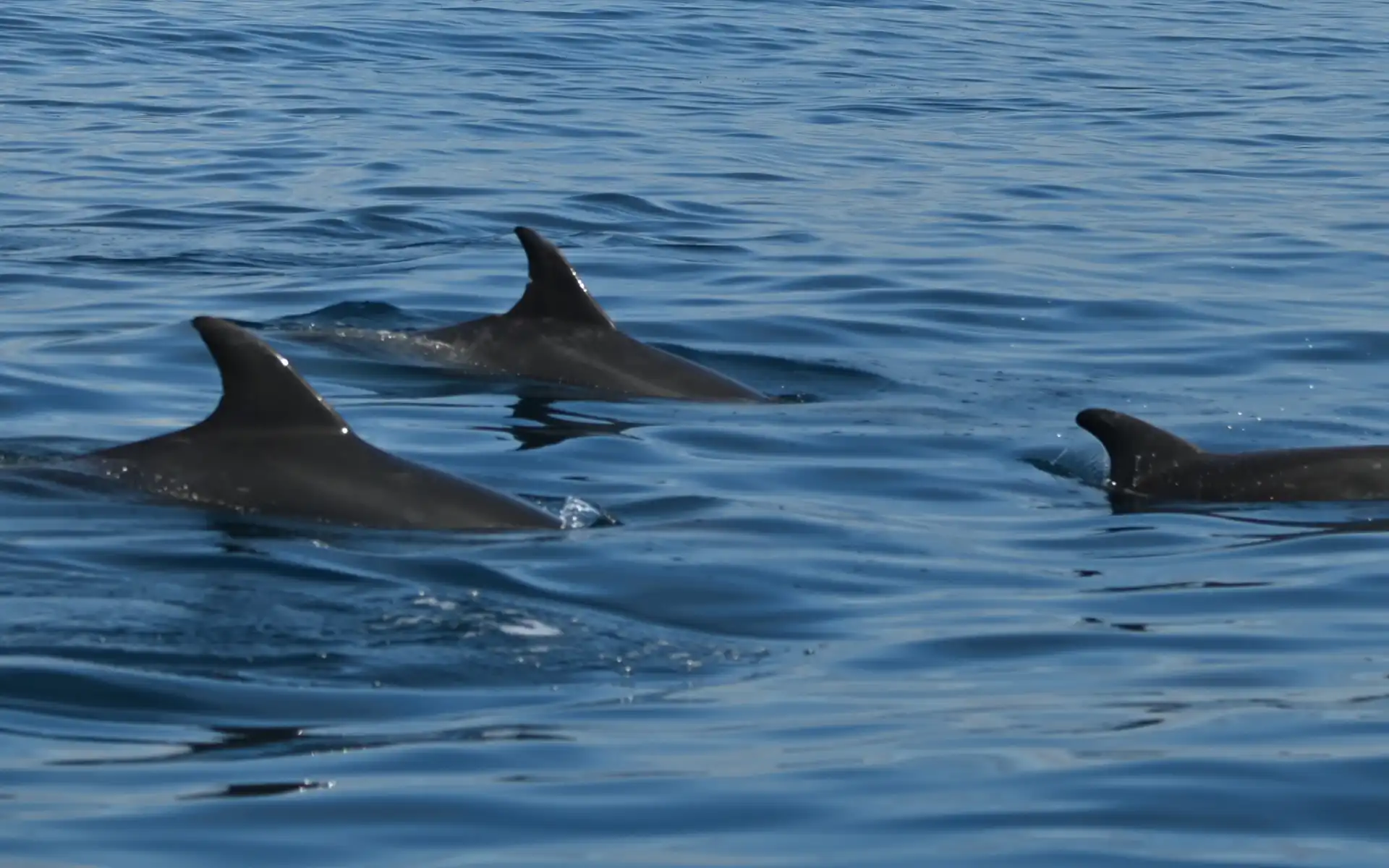
Dolphins of the Parque Marinho Professor Luiz Saldanha, Arrábida
The Parque Marinho Professor Luiz Saldanha is a protected marine area within a natural reserve zone, the Parque Natural da Arrábida. Covering approximately 53 km², the PMPLS serves as a sanctuary, nursery, and feeding ground for various marine, coastal, and oceanic species—both resident and migratory—including seabirds.
Dolphins of the Parque Marinho Professor Luiz Saldanha, Arrábida
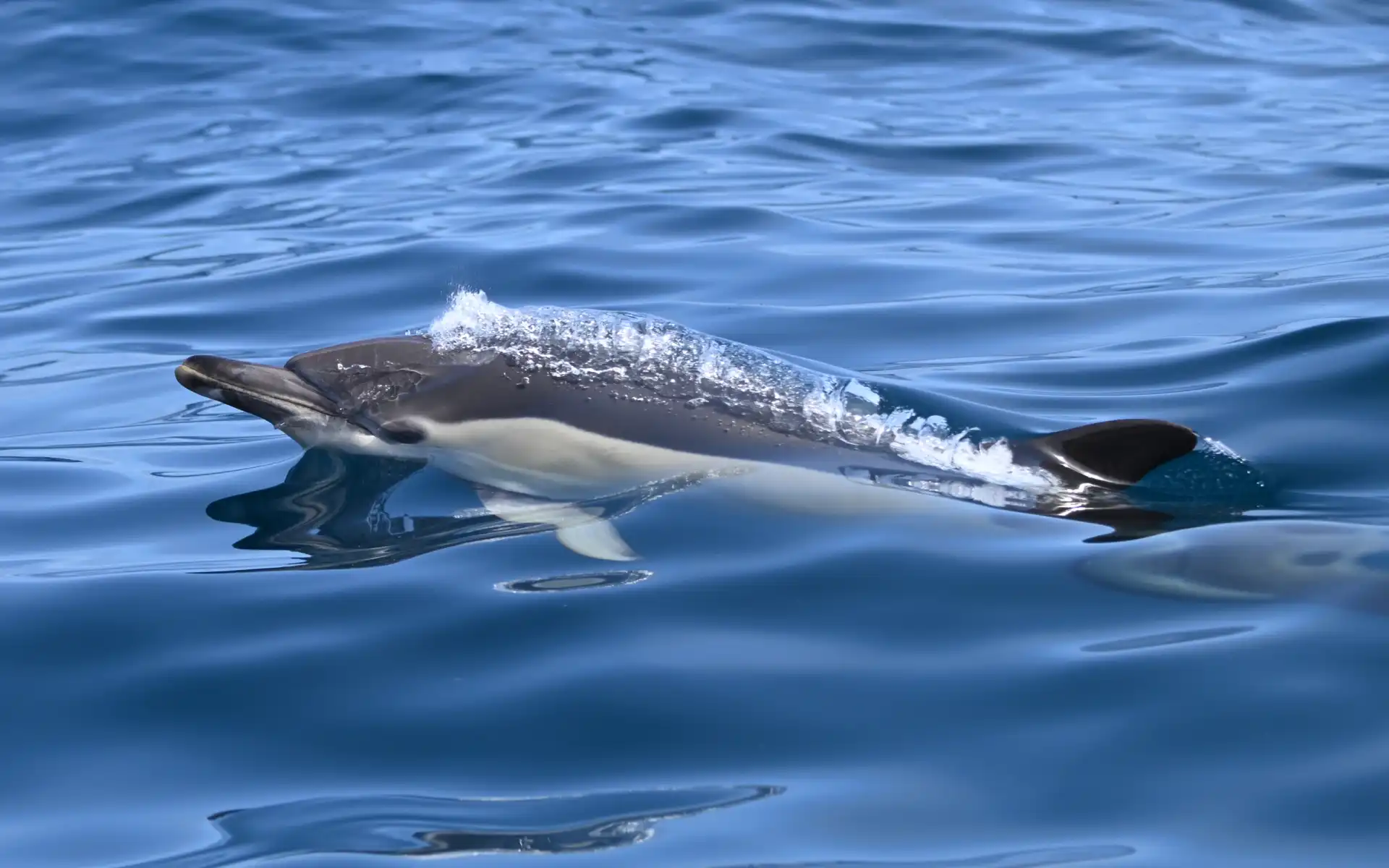
The Parque Marinho Professor Luiz Saldanha provides a rich environment in terms of food and protection for some of the most iconic cetacean species, such as the common dolphin (Delphinus delphis), the most abundant dolphin species along the coast of Sesimbra.
The common dolphin is a cosmopolitan species with a vast geographical distribution, found in oceans and seas worldwide. In Portugal, they are particularly abundant along the Atlantic coast and can often be spotted off the Arrábida coast, where favorable environmental conditions support their presence. Common dolphins are relatively small compared to other cetaceans, measuring between 2.2 and 2.5 meters in length and weighing up to 150 kilograms. Their streamlined bodies allow them to reach impressive speeds, and they are frequently seen swimming and leaping through waves in open waters, creating a mesmerizing spectacle for onlookers.
Beyond their striking appearance, their playful and interactive nature makes them one of the most beloved cetaceans among marine life enthusiasts and ecotourists. Known for their sociable and curious behavior, these dolphins often interact with boats, gliding along their bows in a behavior known as “bow riding.”
Common dolphin groups can range from small family units to large aggregations of hundreds of individuals, depending on food availability and marine conditions. Typically, they live in groups of 10 to 50 dolphins, forming complex social structures.
Their diet consists mainly of small fish and cephalopods, such as squid and octopus. They are agile predators, employing sophisticated hunting strategies—often coordinating in groups to herd schools of fish and capture them efficiently.
Their communication skills are remarkable, relying on a variety of sounds, including whistles and clicks, which play a crucial role in hunting coordination and social interaction. Additionally, they possess a highly developed echolocation system, allowing them to locate prey and navigate in murky waters or at night.
Recognized for their agility and distinctive hourglass-shaped pattern, these cetaceans are frequently sighted off the coast of Sesimbra, one of the best spots for dolphin watching. Boat tours in the region offer unforgettable experiences, allowing visitors to witness their dynamic behavior and impressive leaps over the waves. Protecting their habitat and promoting responsible tourism practices are essential to ensuring their preservation and allowing them to continue enchanting those who visit the waters of Arrábida.
The common dolphin plays a vital role in maintaining the ecological balance of the oceans. As top predators, they help regulate populations of various marine species, contributing to ecosystem health. Moreover, they serve as bioindicators of environmental quality—their presence is a positive sign of marine ecosystem health.
In the Parque Marinho Professor Luiz Saldanha, the conservation of these cetaceans is directly linked to the preservation of coastal habitats and the sustainability of human activities, such as fishing and tourism. Establishing protected areas and enforcing environmental regulations are crucial for ensuring the long-term survival of this species in the region.
Related Adventure Logs
Wildlife Watching: Connecting with the Ocean’s Natural Rhythm

Troia Island: A Paradise by the Sea

Sustainable Tourism: Travelling with Purpose and Respect for the Sea